Thursday, October 27, 2016

Marine Performance Parts Specialists Share 5 Amazing Outboard Performance Booster Tips


Image result for improve the performance of your outboard


Your Marine Performance Parts Professionals Help You Get the Needed Performance Boost


Stainless Marine your marine performance parts analysts would like to share with you these topics we thought would be of interest to you this month regarding 5 amazing outboard performance boosting tips. 


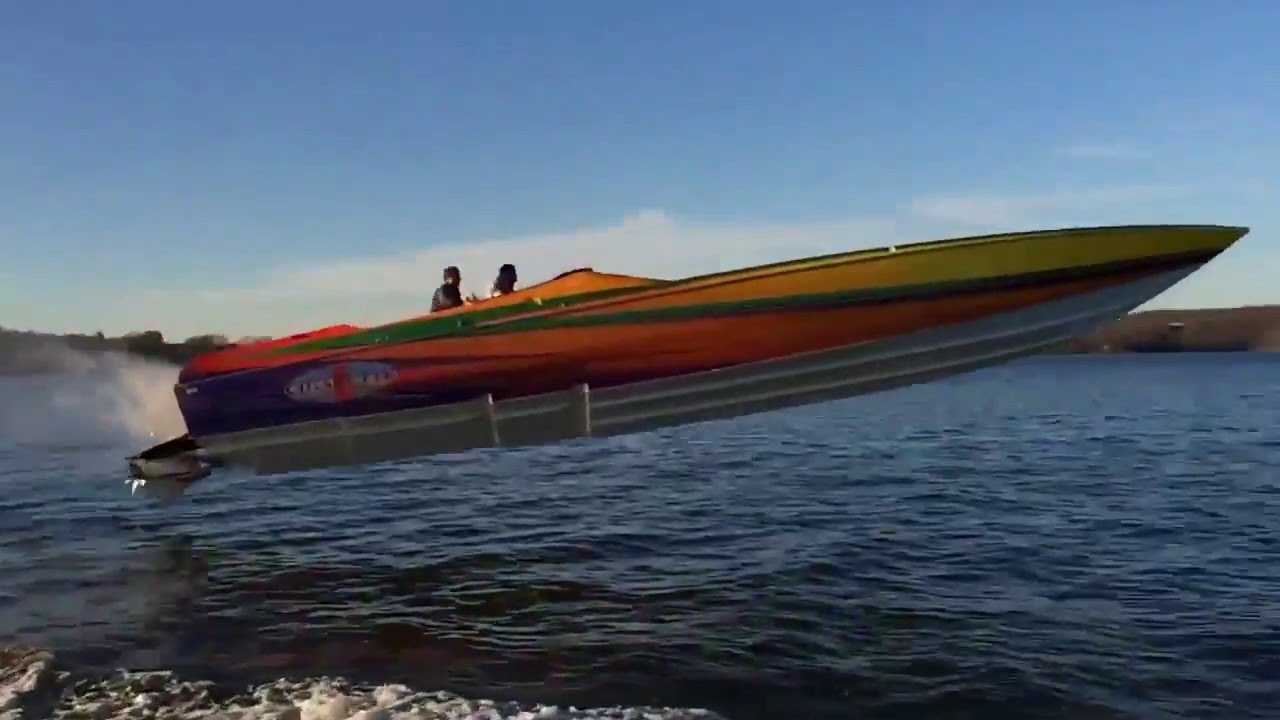
The day before offshore racing's national championships in Clearwater, Florida, Dan Lawrence, throttleman for The Hulk, made what sounded like a simple statement.


“It's all going to come down to setup,” said the 11-year veteran.


Your marine performance parts experts know that Lawrence, from Sarasota, Florida, and driver Rob Nunziato, from Dania Beach across the state, race a 32-foot Doug Wright catamaran in the Superboat Stock class. They were the 2014 national champions under the sanctioning body Super Boat ­International. 


In each of the sport's seven classes, the national championship goes to the team that accumulates the most points in a ­season, so the recent season's finale came down to the 7th Annual Clearwater Bright House Super Boat National Championship off Clearwater Beach.


Lawrence and Nunziato definitely got the setup right on ­Sunday. They nailed the start, ­taking a lead they would never relinquish during the 13-lap race on the calm, 3-mile course. 


1. Don't Go Changing


Recreational boaters may have an image of these high-level racers tinkering with their engines, but that's not true. Lawrence recommends: “Do not modify your engines. Your marine performance parts specialists know you need to run them the way Mercury makes them.


Go to http://www.stainlessmarine.com/product-category/diesel-exhaust-risers-elbows/ and see how you can always find more information on marine performance parts and on 5 amaizng outboard performance boosting tips at Stainless Marine.


Every time you modify it for 2 or 3 mph, you'll lose reliability.” And note that any modifications will void the warranty.


2. Straighten Up


Lawrence sets up his boat to use less positive trim. “The boat is much more efficient if you don't need to trim it out,” he says. Lawrence wants the noses of his outboards' lower units pointed as straight forward as possible. 


Lawrence's competitor ­Schoenbohm, who owns Smart Marine Group and Smart ­Marine Service in Orlando, echoes ­Lawrence's point about trim and says, “More than 3 degrees nose up is detrimental at 55 mph.”


3. Proper Propping


In addition to racing The Hulk, Lawrence owns a flats boat and a 28-foot Spectre center console powered by twin 250 hp Mercury outboards. After some trial and error, he found that the best propellers for the Spectre were five-blade Mercury 15-by-30-inch Maximus stainless-steel props. 


4. Turning Tail


Regardless of the class of boat, during a race you can tell which team is running at its most efficient because the roostertail lowers as the boat accelerates. When a high-speed catamaran or stepped V-bottom runs at high speed, it has virtually no roostertail at all. 


5. Jacked Up


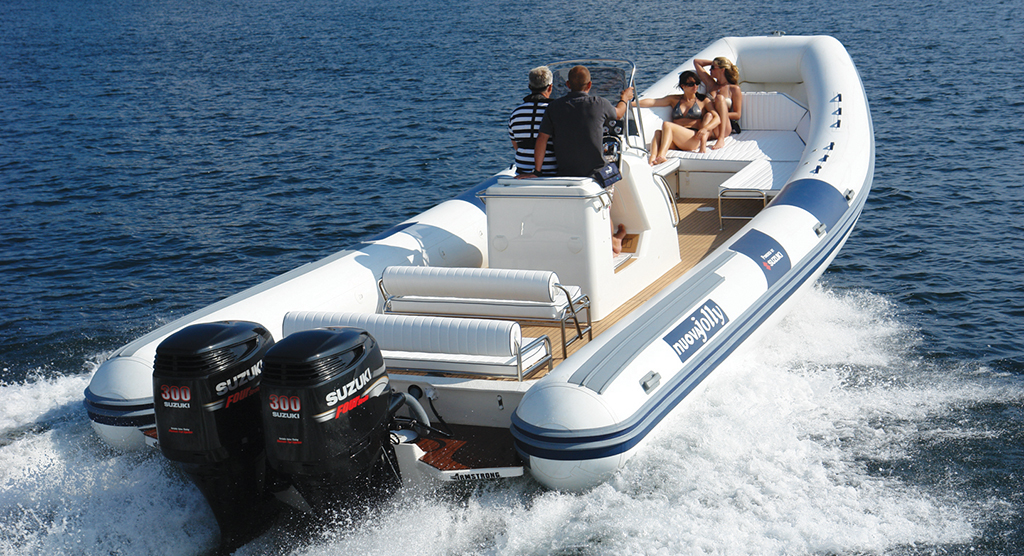
To get the most out of your outboards, Schoenbohm recommends mounting them on a jack plate such as those made by CMC Marine (cmcmarineproducts.com), Bob's Machine Shop (bobsmachine.com) or T-H Marine (thmarine.com). 


A jack plate helps you get the most out of a boat because the best engine position might be between two sets of mounting holes on the transom. Brad Holbrook, a naval architect at CDI Marine Company in Glen Burnie, Maryland, and the crew chief for the Talbot Excavating team, explains why.


Gary Ballough is a 14-time world champion and 13-time national champion in offshore racing, and the throttleman from Boca Raton, Florida, won all those titles in outboard-powered boats.


“Propeller, motor height and setback are everything,” he says. “You can make your boat pretty much do what you want if those three things are right.”


Rent-A-Thrill


If you go to watch the races in Clearwater, the area offers protected bodies of water and the open ocean. Clearwater Beach Marina and Clearwater Harbor Marina both offer slip rentals and fuel docks, and there is a public launch with six lanes at Seminole Boat Ramp. 


The Fastest Boats in the World


Super Boat International has been sanctioning races for more than 30 years. Seven national champions, including Bob Bull's CMS Mechanical team in the Superboat Unlimited class, were crowned in Clearwater. Bull runs a two-boat team with a 48-foot MTI catamaran and a 52-foot MTI catamaran. 


Visit us at Stainless Marine and see how we always have more information on marine performance parts and on 5 amazing tips on boosting your outboard performance.


via Ten Tips to Improve the Performance of Your Outboards


via Photo


Wednesday, October 26, 2016

Marine Engine Parts Experts Dream About the Future of Recreational Boat Comfort and Design


Image result for futuristic recreational boat hull designs


Your Marine Engine Parts Specialists Know There Is No Limit When It Comes to Imagination 


Stainless Marine your marine engine parts analysts would like to share with you these topics we thought would be of interest to you this month regarding the future of recreational boat comfort and design.


Your marine engine parts experts know that the American boating consumer bears a remarkable psychological profile when it comes to wants and needs.


Certainly, your marine engine parts online professionals understand that construction methods such as resin infusion and injection molding have altered business as usual, and ingredients have also changed to include all manner of space-age composites, epoxies, paints, computer mapping for engines that produces vastly greater horsepower from smaller blocks, and so on. 


Look at how well multihulls handle heavy seas. When it comes to seakeeping ability, efficiency and performance, the catamaran has a lot going for it, as anyone who happened to catch some of the most recent America's Cup racing can attest. 


Here are four of the latest hull-design innovations being used elsewhere in the maritime world that we will likely never accept for our recreational boats - even though they all work well.


Wave-Piercing Hulls


Most accounts cite wave-piercing technology as coming on the scene around the start of the 20th century. However, your marine engine performance parts analysts know that it has been employed as far back as the times of the Phoenicians and ancient Romans. 


Stepped Hulls


OK, this hull form has achieved a certain level of acceptance in our recreational boats, mostly in performance boats or offshore center consoles. But why isn't it more popular? The stepped bottom has been around as a V-bottom refinement since at least 1912. Steps are grooves in the hull stretching outward from the keel to the chines. Most hulls sport one or two steps per side. 


How much the hull surface contacts the water directly determines the amount of drag a hull suffers.


Your Marine Engine Parts Professionals Focus On Style and Comfort


You can find more information as well as get assistance on boat engine parts and on the future of recreational boat comfort and design at Stainless Marine.


Your boat engine parts specialists know that steps (also called vents) decrease the amount of hull contacting the water (called the wetted surface), thereby decreasing drag, increasing speed for the same horsepower, and increasing fuel efficiency. It all sounds good. 


Most owners of stepped-hull vessels are experienced and want to travel at high speeds in moderate to heavy seas, and/or achieve good economy and range. Yet to date, your marine parts for sale experts feel that performance and center console builders aside, only Regal Boats, with its FasTrac hulls, and Formula have committed to using steps in production cruisers and sport boats.


Asymmetrical Twin Hulls


This unique design concept comes from the drawing board of Larry Graf, the pioneer who put power catamarans on the map here in the U.S. when he founded Glacier Bay Boats in 1987. His new company, Aspen Powerboats, employs a cat design where one hull is narrower (35 percent) than the other. His patent calls it a Power Proa, and it relies on a single engine in only the wider of the two hulls. 


Hydrofoils


Once the strict province of commercial ferries and a few high-speed military vessels, the most recent America's Cup has spurred hydrofoil acceptance to new heights. Will it catch on with powerboats?


The hydrofoil design acts exactly like an airplane wing, providing more lift than the drag coefficient the vessel produces, thereby lifting the entire hull out of the water. Only the hydrofoils remain in the water, unaffected by surface wave action. 


The most significant disadvantage to this system on recreational boats is definitely the deployment of the foils. Unless you want the added draft of these struts sticking down below your hull all the time, you must be able to extend and withdraw them - a complex engineering feat. 


You won't ever see this on small recreational boats, but you can nod knowingly when someone points one out on a mega-yacht in the near future.


Stainless Marine has more information on marine engine parts, boat engine parts, marine boat parts and on the future of recreational boat comfort and design. 


via Six Amazing Hull Designs


via Photo


Thursday, October 20, 2016

Group #27 Battery Box Analysts Share Wake Jumping Safety Tips


Image result for wake jumping safety


Your Group #27 Battery Box Experts Suggest Not Getting Too Close For Comfort


Stainless Marine your group #27 battery box professionals would like to share with you these topics we thought would be of interest to you this month regarding wake jumping safety tips. 


Your group #27 battery box analysts suggest keeping this lesson in mind: Too Close for Comfort


Jumping wakes on a PWC is a great rush. Your marine parts USA professionals understand that the speed combined with a momentary sense of flight makes for an intoxicating boost of adrenaline. However, boating navigation rules still apply, as does common sense. 


PWCs


Legal Requirements


The U.S. Coast Guard classifies personal watercraft (PWC) as Class A inboard boats. Your marine parts Houston experts know that means PWC are subject to most of the same rules and requirements as any other. There are a few laws that apply specifically to PWCs and PWC operators in Ohio.


Equipment: 


  • Life Jackets must be worn by each person on board. Choose a properly fitting, U.S. Coast Guard-approved life jacket appropriate for PWC and wear it.

  • State of Ohio equipment laws require you to have a fire extinguisher on board.


  1. No Alcohol or Drugs: Don't operate your personal watercraft under the influence of anything but your good judgment. Alcohol and drugs reduce your ability to make quick decisions and handle your craft in all situations. 


  2. Local Ordinances: It's your responsibility to know and follow local laws and ordinances regarding use of your watercraft. 


Your Group #27 Battery Box Specialists Want Safety To Be the Main Focus When Having Fun


You can find more information as well as get assistance on boat parts and accessories and on wake jumping safety tips at Stainless Marine.


Think Safe - Ride Safe


  • Right of way: Your boat parts and accessories experts want you to follow basic boating guidelines. Sailboats, commercial vessels, and fishing vessels always have the right of way. Your marine parts and supplies specialists know to stay to the right when approaching an oncoming craft, so that it passes on your left side. 


  • Awareness: Constantly look about for traffic on the water, and especially near you. Know where other boats are and where they're heading before you make a turn or cross a wake.


  • Wake jumping: If your course takes you across the wake of another boat, make sure your visibility is not obstructed by that boat. 


  • Operating speed: Follow local regulations regarding speed limits, whether posted or not. In congested areas, lower your speed. 


  • Passengers and guests: Never carry more than the maximum passenger load specified for your craft. A person being towed counts as a passenger. 


Considerations


  • Launch ramp etiquette: Be considerate and efficient when launching your personal watercraft. 


  • Noise: PWCs emit a whine that can be annoying to anglers, swimmers, and other boaters. .


  • Environment: Respect ecologically sensitive areas. Don't spill fuel or oil and don't leave litter or other pollutants where they don't belong.


So don't forget these helpful tips for maintaining wake jumping safety. 1) Keep in mind who has the right of way;  2) constantly look about for traffic on the water, and especially near you;  and 3) follow local speed limits.


Stainless Marine has more information on group #27 battery box, boat parts and accessories, stainless steel tubing and on wake jumping safety tips.


via Boating Fail: Too Close for Comfort


via Photo


via PWCs


Wednesday, October 19, 2016

Marine Engine Parts Experts Has Amazing Boat Thruster Tips


 Image result for Choosing the right boat thruster


Your Marine Engine Parts Specialists Know That Thrusters Are A Crucial Tool In Your Boater Box 


Stainless Marine your marine engine parts professionals would like to share with you these topics we thought would be of interest to you this month regarding amazing boat thruster buying tips.


Your marine engine parts analysts know that boatbuilders now offer thrusters on boats as small as 20 feet. Thrusters should not be looked upon as crutches; skippers of tugboats and large yachts use them. A thruster is simply another tool in the boater's box. 


12-Volt vs. 24-Volt


A 24-volt thruster will have less current draw when running and, as a result, may be installed with smaller cables. In general, we recommend 24-volt thrusters be powered via a dedicated bank of two or more batteries.


Hydraulic vs. Electric


Hydraulic thrusters make sense when the vessel is already equipped with an existing hydraulic system. Hydraulic thrusters don't build up heat or cut out like electric models if you lean on the switch too long. (For an exception, see below.)


Internal vs. External


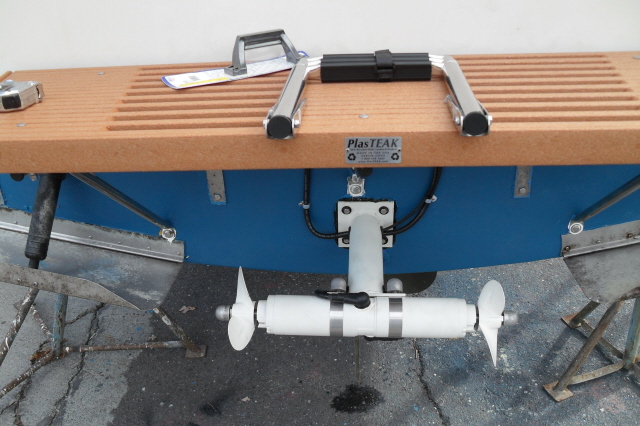
Water-cooled, electric-powered external thrusters, like the Yacht Thruster models at the top of this page, can be run for long periods of time. They may also require less amperage and, thus, fewer batteries. 


Props


Biased props (that look like they came off Red October) deliver better thrust than older Kaplan-style propellers. Your marine engine parts analysts know that dual props provide more thrust, though smaller boats will do fine with a single-prop thruster.


Go to http://www.stainlessmarine.com/ and see how you can find more information as well as get assistance on marine engine parts and on amazing boat thruster buying tips at Stainless Marine.


Thrust


Proportional thrusters cost more but allow finer control: The more you push the joystick, the more thrust you apply. Simple on-off thrusters cost less.


Remote


This is an available option for most thrusters. It should be an addition to and not take the place of a hard-wired joystick or touch pad. Remote batteries can die at the wrong time, and remotes can mysteriously fall overboard.


Shear Pin


An internal shear pin accessible inside the hull is easier to replace than one located in the tunnel. Tunnels will suck in poly bags, mooring lines and other potentially pin-busting materials. Forewarned is forearmed.


The Wind-Draft of the Boat


The forces applied by the wind onto the boat can be determined by multiplying the wind pressure by the wind draft area. The wind draft area is determined by the shape and the dimensions of the superstructure. Also the wind angle is playing its part. The worst situation is created if the wind is at 90 degrees to the boat. 


The Torque


The torque is determined by multiplying the wind force by the distance (A) between the center of effort of the wind and the center of rotation of the boat. 


The Thrust Force


The bow thruster is required to apply a countering thrust force, which is at least equal to the thrust force applied by the wind. 


Always bear in mind that the effective performance of a bow thruster will vary with each particular boat, as the displacement, the shape of the underwater section and the positioning of the bow thruster will always be variable factor.


Learn more at Stainless Marine about marine engine parts and on amazing boat thruster buying tips.


via Choosing the Right Thruster


via Vetus How To Size Bow Thrusters


via Photo


Thursday, October 13, 2016

Boat Parts and Accessories Experts Show You the Best Tools to Buy For Your Boating Needs


Evans Starzinger 

Your Boat Parts and Accessories Specialists Has the Best Suggests For the Tools You Need


Stainless Marine your boat parts and accessories professionals would like to share with you these topics we thought would be of interest to you this month regarding the best tools to buy for your boating needs.


Your boat parts and accessories analysts know that Father's Day is coming up soon and if none of the suggestions in our recent Chandlery feature on gifts for sailing parents seems to fit, you can always fall back on a sure hit for Dad: tools.


We've carried out dozens of tests of various tools in the recent past, all of which can be found by using our search bar and typing “tools.” 


Previous PS Tool Tests


If your favorite sailor is in the middle of restoring a boat from the mid-80s or earlier, he or she probably has several wiring projects to tackle. 


Since cruising sailors often lack access to AC power, battery-operated tools are high on their list. A few years ago, we featured a list of several handy battery-operated tools that are at home at the workshop or at sea. 


If Dad is starting from scratch, and has plans to invest in power tools check out Technical Editor Ralph Naranjo's list of recommended tools for cutting, drilling, sanding, and grinding.


Building the Boat Doctor's Toolbox


Having the right tool makes every boat maintenance or repair job that much easier. Having it handy makes an even bigger difference. With that in mind, veteran cruiser, and Practical Sailor tester Evans Starzinger decided to develop one small tool bag that would cover 85 percent of the jobs by itself.


Boat Repair Equipment


This category consists of a very conventional collection of tools. Starzinger did not want to carry a full set of both metric and standard socket wrenches, so the only real learning point was to figure out exactly which box wrenches were needed to fit the bolts on our former boat, Hawk. The following tools fall into this category:


  • Largest flat-blade screwdriver that will fit in the bag, also used as pry bar

  • Two multi-blade screwdrivers (large ratchet unit and smaller one with specialty blades)

  • Three small jewelers' screwdrivers two flat blades (small and tiny) and one Phillips

  • Eight ratcheting box wrenches two 7/16 inch, two half-inch, and one each of 9/16 inch, 7 millimeter, 12 millimeter, and 13 millimeter

  • An adjustable crescent wrench

  • Two vice grips (needle nose and standard)

  • Two sets of hex wrenches (metric and standard)

  • Pipe wrench

  • Filter wrench (style with adjustable chain)

  • Lineman's pliers with

  • heavy-duty wire cutters

  • Exacto knife

  • Heavy-duty scissors


Electrical Tools


Investing in high-quality electrical tools is well worth it, if you like trouble-free connection making.


Go to http://www.stainlessmarine.com/about-us/ and see how you can find more information as well as get assistance on boat parts and accessories and on the best tools to buy for your boating needs.


Through our own experiences and discussions with electrical component experts, we have been convinced that a good crimp connection is the way to go rather than soldering. Our electrical toolkit includes:


  • Digital multimeter

  • Ratchet crimper

  • Wire stripper

  • Wire cutters


Sewing Tools Toolkit


The thread needs to be strong and UV resistant. The small needle-nose pliers and vice grips are used to put a needle through thick cloth. We carry the following for sewing needs:


  • Heavy sailmaker needles

  • Normal household sewing needles

  • Goretex sewing thread

  • Waxed dental floss

  • Heavy, polyester waxed whipping twine

  • Small scissors

  • Needle-nosed pliers

  • Small vice grips

  • Lighter

  • Sailing knife

  • Fid set


Consumables


While we have many special-purpose lubricants and adhesives, we use LanoCote www.defender.com) as our general purpose stainless-fastener lubricant, blue Loctite (www.loctite.com) as the standard thread lock, and super glue and a two-part epoxy putty as the normal adhesives. In our consumables toolkit you'll find:


  • A small assortment of crimps, terminals, and heat-shrink tubing

  • Wire ties

  • Stainless-steel (or monel) seizing wire (to tie shackles closed)

  • A small jar of LanoCote

  • WD-40

  • Electrical tape

  • Rigging tape

  • Blue Loctite

  • Silicone caulk

  • Super glue

  • Epoxy


Conclusions


This single, small tool kit, along with a DeWalt (www.dewalt.com) or Makita cordless drill and carbide bits, allowed Starzinger to do most common jobs without unpacking any of his big tool boxes.


Click here and see how Stainless Marine always has more information on boat parts and accessories and on the best tools to buy for your boating needs. 


Watch our related video on Boat Parts and Accessories below


via Tool Buying Guide For the Cruising Sailor


Wednesday, October 12, 2016

Performance Marine Parts Analysts Discuss the Need for Safe Trailer Tire Pressure


Image result for safe air pressure in trailer tires


Your Performance Marine Parts Experts Know You Always Want a Safe Towing Experience


Stainless Marine your performance marine parts professionals would like to share with you these topics we thought would be of interest to you this month regarding the need for safe trailer tire pressure.


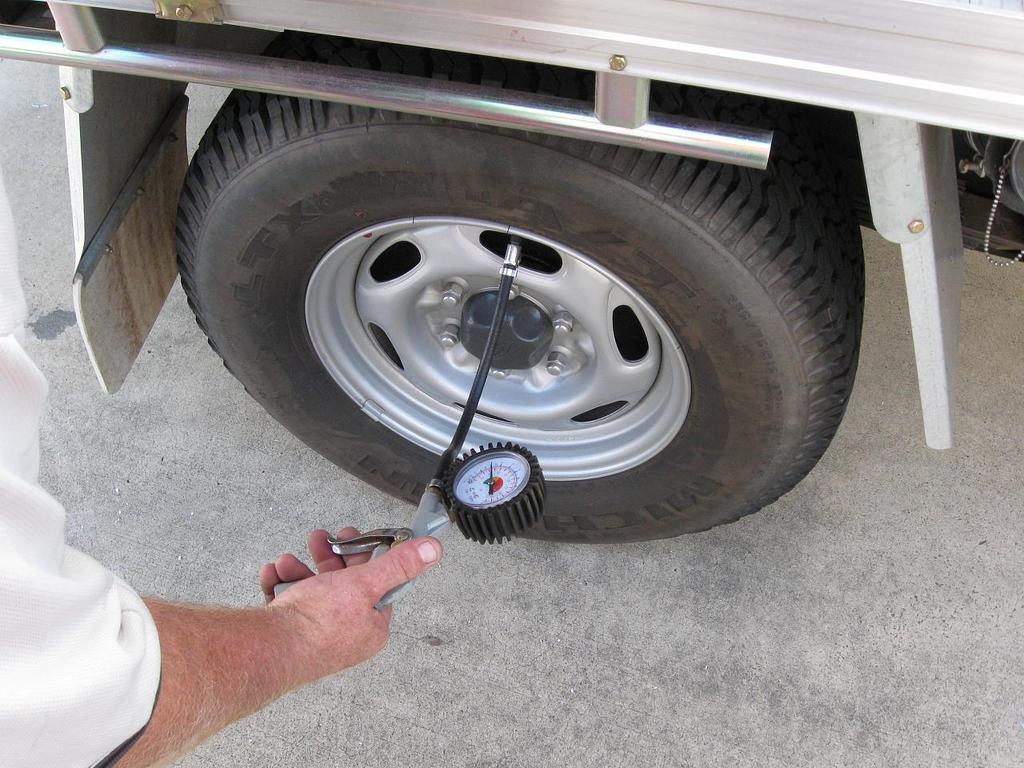
Your performance marine parts analysts know that having the proper air pressure in your trailer tires in important for a safe towing experience. Your performance boat engines analysts know it's important to know that your tires are rated for towing and properly inflated to tow your haul.


If you want to learn how to tow a boat you've come to the right place. With this guide, you can begin developing your trailering skills today.


Your offshore performance parts professionals know that trailer boating has a number of advantages over leaving your boat in the water at a marina or pier: you can take your boat to new and far-flung cruising grounds, launch at ramps close to different fishing spots, and often save money by keeping a boat on a trailer.


Wait a sec-if hitches are measured by class, why are we using qualifiers like “about,” and “up to”? Because these figures aren't as cut-and-dried as one might hope. Accessories like weight-distributing hitches can change the capacity. 


Tongue weight should always be between 10 and 15 percent of the total boat-and-trailer package (gross towing weight, or GTW, which is the GCVW minus the tow vehicle's weight). If it is outside of these parameters, trailer sway is a distinct-and dangerous-possibility.

Driver comfort


There are many factors that add up to a great tow vehicle: don't forget driver comfort.


With a tow vehicle and a trailer boat sitting in your driveway, the next step is figuring out how to put the two together.  


The next item to consider is how to roll down the road safely. 


TOP 5 TIPS FOR SAFE BOAT TOWING


1. Before trailering, perform a full pre-tow safety inspection of your rig.


2. Tongue weight should be about 10- to 15-percent of your load. If it's not, the trailer might sway. Your outboard engine brackets specialists understand that swaying is extremely dangerous-if you detect sway in your rig, slow down immediately, pull over, and adjust your load.


Your Performance Marine Parts Specialists Say It Isn't Difficult to Master Towing Safety


You can find more information as well as get assistance on outboard engine brackets and on the need for safe trailer tire pressure at Stainless Marine.


3. Make sure your truck's load is level and even, too.


4. Make wide turns to avoid clipping a curb or other obstructions.


5. Leave extra following room between your vehicle and those in front of you. When towing a heavy load, braking distance may be significantly increased.


Whether you're putting your boat into the water or hauling it out, you'll have to master backing the trailer to get the job done. 


Your high performance marine engine parts experts say that this is one aspect of trailering that's much easier to get a grip on by watching it happen, instead of just reading about it. So we strongly suggest checking out the video. 


When you arrive at the boat ramp, pull out of the way of ramp traffic before you prep for the launching. 


Back the boat down the ramp until the stern begins to float, and the engine outdrive(s) are sufficiently submerged to pick up cooling water. 


At very busy ramps, you'll see a “courtesy dock” nearby. The idea of these is to keep traffic moving as quickly as possible. Though different rigs vary (and yes, this powercat certainly makes for an unusual rig), when you dunk the trailer for retrieval the front portion of the bunks or rollers should always be exposed, so the bow of the boat doesn't drift off to either side.


It always takes a bit of common sense and flexibility to determine the best way to get the boat onto the trailer, on any given day at any given ramp. But whenever you use the boat's powerplant(s) to push it onto the trailer, make sure the boat is properly aligned-and apply that power judiciously. 


Ready for some more advanced info? Then it's time to watch Tips for Launching and Retrieving a Trailer Boat. When you do pull the boat out of the water, remember: don't stop right there on the ramp. Good trailer-boating etiquette dictates you should always strive to block the launch facility as briefly as possible, so pull up into the parking lot or off the side of the road before you begin preparing for the drive home.


Stainless Marine has more information on performance marine parts, outboard engine brackets, marine performance parts, and on the need for safe trailer tire pressure.


via Trailer Tire Air Pressure


via Boat Towing Guide: How to Trailer a Boat


via Photo